The Neurobiological Architecture of Psychopathy: Decoding the Antisocial Brain Through Modern Neuroscience
Pop culture frequently caricatures psychopathy as a calculated choice born out of pure malice or a cinematic, hyper-intelligent villainy. However, the reality unveiled by modern neuroimaging tools is far more complex and grounded in biology. Psychopathy is a severe neurodevelopmental disorder characterized by distinct structural anomalies, faulty neural wiring, and localized metabolic deficiencies.By shifting the lens from behavioral description to objective structural magnetic resonance imaging (sMRI) and functional neural connectivity (fMRI), cognitive neuroscience has mapped the exact neural anomalies that define this condition. This comprehensive, research-backed analysis decodes the psychopathic brain, examining the structural pathologies, connectivity failures, and genetic underpinnings that separate cognitive logic from emotional reality.
Sneha shah
6/2/202611 min read
1. The Core Scientific Architecture
To understand the psychopathic brain, one must examine a triad of interconnected neural anomalies: emotional processing engines, executive control centers, and the white-matter tracts that link them together.
The Amygdala Deficit (Emotional Engine Failure)
The amygdala is a collection of nuclei nested deep within the temporal lobe, serving as the hub for processing fear, social conditioning, threat detection, and emotional empathy. In neurotypical individuals, witnessing another person's distress triggers an immediate spike in amygdala activity, generating an unpleasant visceral response that deters antisocial behavior.
In individuals with psychopathy, this system is structurally compromised. Meta-analyses of structural MRI data show up to an \(18\%\) reduction in gray matter volume within the amygdala, alongside visible surface deformations. When exposed to highly distressing imagery, moral dilemmas, or threatening stimuli during fMRI scans, these individuals exhibit profoundly muted blood-oxygen-level-dependent (BOLD) responses. The brain's emotional alarm system simply fails to ring.
The Ventromedial Prefrontal Cortex (The Broken Brakes)
The Ventromedial Prefrontal Cortex (vmPFC) and the adjacent Orbitofrontal Cortex (OFC) govern long-term consequence calculation, ethical decision-making, social evaluation, and impulse control. If the amygdala provides the emotional signal, the vmPFC translates that signal into an actionable moral choices.
Neuroimaging studies consistently document a marked decrease in cortical thickness and gray matter volume within the vmPFC of psychopathic populations. Without a fully functional vmPFC, an individual cannot properly weight future punishments against immediate rewards. This creates a state of "myopic choice-making," where the immediate impulse to act overrides any cognitive consideration of long-term legal, social, or moral fallout.
The Uncinate Fasciculus (The Disconnected Wire)
The most striking deficit in psychopathy is not found within a single brain region, but in the white-matter superhighway that connects them: the uncinate fasciculus. This tract acts as the physical data cable transferring emotional inputs from the deep amygdala to the analytical prefrontal cortex.
Diffusion Tensor Imaging (DTI) reveals that psychopathic individuals suffer from a profound loss of microstructural integrity within the uncinate fasciculus. The fractional anisotropy values—a measure of how well-ordered and robust a white matter tract is—are significantly reduced. This represents a state of functional and structural hypoconnectivity. The logical prefrontal cortex can understand that an action is illegal or harmful, but because the cable to the amygdala is frayed, the brain never generates the corresponding feeling of guilt or aversion.
2. Deep-Dive Neuroimaging Correlates
The behavioral presentation of psychopathy maps directly onto specific, reproducible neurological profiles across several distinct regions of interest (ROIs).
The Paralimbic System Overhaul
For decades, researchers focused strictly on the limbic system. However, pioneer forensic neuroscientist Dr. Kent Kiehl expanded this focus to the paralimbic system, a network of interconnected structures including the anterior cingulate cortex (ACC), insula, parahippocampal gyrus, and orbitofrontal cortex.
The ACC regulates error monitoring and conflict detection. When a neurotypical person makes a mistake or violates a social rule, the ACC registers an "error-related negativity" signal. In psychopathic individuals, this signal is deeply blunted. This lack of feedback explains why individuals with psychopathy frequently repeat self-destructive or criminal behaviors, completely unsawed by past incarcerations or social rejection.
The Striatum and Reward Hypersensitivity
While the emotional and executive regions in psychopathic individuals show marked deficits, the reward architecture tells a very different story. The striatum, a core component of the brain's dopamine reward pathway, is frequently enlarged in psychopathic individuals, with studies showing an average \(10\%\) to \(15\%\) increase in volume.
This structural abnormality creates a hyper-reactive response to anticipation of rewards, whether that reward is money, power, status, or sex. When a psychopathic individual is pursuing a goal, their striatum floods the brain with dopamine, creating an intense focus on the payoff. Because their vmPFC brakes are broken and their amygdala is blind to risk, this hyper-reactive reward system drives reckless, opportunistic, and predatory behaviors.
3. Structural Pathology vs. Behavioral Manifestation
The relationship between structural brain deficits and the clinical traits of psychopathy maps directly onto specific, localized tissue modifications. Each behavioral symptom can be traced back to a failure in an exact neurological region, highlighting how deeply embedded this disorder is within the brain’s anatomy.
Within the emotional processing centers, an average \(18\%\) volume reduction in the amygdala, combined with a diminished BOLD response during emotional stimuli, leads directly to a deficient fear conditioning response. This structural degradation explains the complete absence of emotional empathy and the profound emotional coldness often observed in psychopathic individuals. They do not experience a standard biological aversion to risk, nor do they feel an internal alarm when witnessing the distress of others.
Further forward in the brain, the Ventromedial Prefrontal Cortex (vmPFC) displays decreased cortical thickness and reduced gray matter density. Behaviorally, this pathology manifests as an inability to experience moral guilt, severely impaired choice-making, and an absolute lack of remorse. Because the vmPFC is responsible for calculating long-term consequences and weighing moral outcomes, its degradation leaves the individual focused entirely on immediate gratification.
This isolation of thought from feeling is worsened by the compromised microstructural integrity of the uncinate fasciculus, which shows significantly reduced fractional anisotropy. This white matter pathway serves as the data cable connecting emotion to logic. When it fails, it creates a profound structural hypoconnectivity, leading to a stark disconnect between cognitive knowing and emotional feeling. This allows psychopathic individuals to maintain a superficial charm and manipulate social situations effortlessly, as they understand social rules intellectually but are entirely detached from them emotionally.
In stark contrast to these under-functioning regions, the striatum frequently exhibits a \(10\%\) to \(15\%\) volume enlargement, which drives severe dopamine hyper-reactivity. This overdeveloped reward center triggers pathological sensation-seeking, impulsive thrill-seeking, and an obsessive, reward-driven focus. When pursuing a goal, the hyper-reactive striatum effectively blinds the individual to danger, driving them toward high-stakes, opportunistic, and predatory behaviors.
Finally, the Anterior Cingulate Cortex (ACC) displays attenuated error-related negativity signals during cognitive challenges. Because the ACC is responsible for conflict detection and error monitoring, this specific pathology results in a flat failure to learn from negative consequences. Consequently, individuals with psychopathy frequently repeat self-destructive or antisocial behavioral patterns, completely unswayed by past punishments, legal interventions, or social rejection.
4. The Etiological Matrix: Genetics, Environment, and Epigenetics
How does a brain develop these highly specific structural anomalies? The consensus in psychiatric genetics indicates that psychopathy is a highly heritable condition, with twin and adoption studies estimating a heritability index (\(h^{2}\)) of \(0.40\) to \(0.60\). However, genes do not act in isolation; they dictate how the brain responds to environmental trauma.
The MAOA Gene and the "Warrior" Fallacy
A primary genetic focus lands on the Monoamine Oxidase A (MAOA) gene, which regulates the breakdown of neurotransmitters like serotonin and dopamine in the synapse. A specific low-expression variant, known as MAOA-L, leaves the brain awash in unmoderated neurotransmitters during early development.
Crucially, possessing the MAOA-L variant does not automatically make someone a psychopath. Landmark longitudinal studies demonstrate an epigenetic interaction: individuals with the MAOA-L gene who suffer severe childhood abuse or neglect show an incredibly high propensity for violent psychopathy. Conversely, those with the same genetic variant raised in stable, nurturing environments show no such inclination. The genetic vulnerability alters the development of the amygdala and prefrontal cortex, but early environmental trauma acts as the catalyst that triggers the structural damage.
5. The "Successful" vs. Unsuccessful Psychopath
When conducting or analyzing neurobiological research on psychopathy, a critical distinction must be made regarding sample selection. The vast majority of early neuroimaging data was gathered from incarcerated populations—individuals labeled as "unsuccessful psychopaths" due to their arrest and conviction.
However, a separate demographic exists: "successful" or corporate psychopaths. These individuals score highly on the psychopathy spectrum but operate freely within high-stress corporate environments, politics, or emergency fields, leveraging their traits for professional advancement without resorting to overt, localized physical violence.
Neuroimaging studies comparing these two sub-groups reveal illuminating differences:
Preserved Executive Infrastructure: Successful psychopaths display significantly higher gray matter volume and better structural integrity in the prefrontal cortex compared to their unsuccessful counterparts.
Intact Brakes: Their enhanced prefrontal architecture allows them to exercise superior behavioral control. While they still lack emotional empathy (due to identical amygdala deficits), their intact prefrontal cortex grants them the executive control needed to calculate risk effectively, mimic social norms seamlessly, and avoid legal consequences.
6.Identifying a psychopath
professionally relies on assessing a cluster of distinct personality traits, emotional deficits, and behavioral patterns. In clinical settings, psychologists use the Hare Psychopathy Checklist-Revised (PCL-R) [1] to score these traits objectively, rather than relying on a single behavior.
Here are the 10 key signs used to identify psychopathy, categorized by how they think, feel, and behave:
1. Superficial Charm and Smooth Talking
Psychopaths are often highly charismatic, articulate, and engaging when you first meet them. They are excellent conversationalists who use compliments, humor, and fake warmth to disarm people and win their trust quickly.
2. Grandiose Sense of Self-Worth
They possess an arrogant, highly inflated opinion of themselves. They believe they are superior to others, feel entitled to special treatment, and genuinely look down upon standard societal rules, viewing them as applicable only to "ordinary" people.
3. Pathological Lying
Lying is a natural, automatic reflex for a psychopath. They lie effortlessly about both trivial details and major events. If caught in a lie, they do not get embarrassed; instead, they smoothly change the story or craft a new lie to cover the old one.
4. Expert Manipulation and Cunning Behavior
They view people as tools or pawns to be used for personal gain, money, power, or entertainment. They are masters of gaslighting, shifting blame, and playing psychological games to make others doubt their own reality.
5. Complete Lack of Remorse or Guilt
Even when their actions cause severe financial, emotional, or physical harm to others, psychopaths feel zero internal regret. They will calmly rationalize their behavior, claim the victim deserved it, or completely deny that any harm occurred.
6. Profound Lack of Empathy (Callousness)
As shown in the brain research, they suffer from an emotional blindness. They can intellectually understand that someone is suffering, but they cannot feel it. They view other people's feelings—like crying or fear—as a weakness to be exploited.
7. Parasitic Lifestyle
Psychopaths prefer to live off the hard work, money, and resources of others. They intentionally depend on friends, family, or romantic partners for shelter, finance, and status without ever intending to contribute or give anything back.
8. Poor Behavioral Control and High Impulsivity
Because their prefrontal cortex "brakes" do not function correctly, they have a very low frustration threshold. They snap into sudden anger, act on immediate whims without thinking of the consequences, and display highly erratic behavior.
9. Constant Need for Stimulation (Prone to Boredom)
Due to a hyper-reactive reward system (the striatum), psychopaths live in a state of chronic boredom. They have a pathological need for constant excitement, novelty, and high-risk thrills, often leading them to break rules just for the adrenaline rush.
10. Complete Irresponsibility
They are entirely incapable of maintaining long-term obligations. Whether it is fulfilling a contract, paying back debts, showing up for work, or honoring parental duties, they routinely abandon their responsibilities without a second thought.
7.The Mask of Sanity: Why Psychopaths Are Impossible to Spot Easily
A common misconception is that a psychopathic individual will appear visibly erratic, angry, or socially awkward. In reality, the exact opposite is true. Research from institutions like Georgetown University reveals that psychopaths are masters of social mimicking and psychological masking. Because their brains cannot naturally generate emotions like empathy or love, they spend years meticulously observing neurotypical people. They learn exactly when to smile, when to offer condolences, and how to mimic distress. They do not feel the emotion; they simply perform a well-rehearsed script.
Furthermore, their greatest weapon is their superficial charm. When you first meet a psychopath, they often appear to be the most charming, attentive, and helpful person in the room. They use intense eye contact, active listening, and tailored flattery to disarm your defenses and gain your trust rapidly. By the time a victim notices the subtle signs of manipulation or gaslighting, they are already deeply entangled in the relationship or business venture.
Ultimately, the average person cannot identify them because human psychology relies on "reciprocity"—the assumption that everyone possesses a basic moral baseline, a fear of consequences, and a capacity for guilt. Because a psychopath completely lacks this biological infrastructure, they exploit our natural trust, using our own empathy as a tool against us while remaining entirely invisible behind a flawless mask of normalcy.
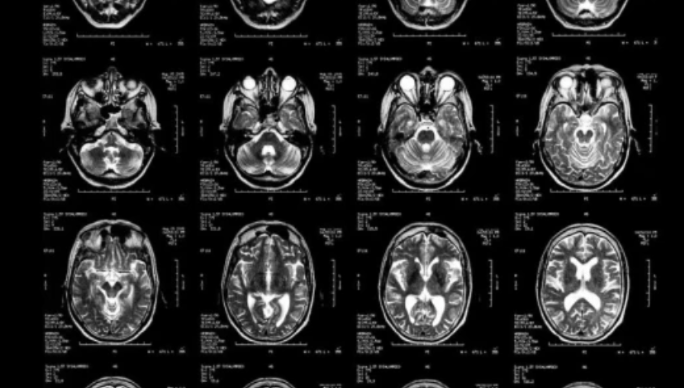
8.Visualizing the Data: Real Neuroimaging Records
The Story Behind the Scans: A Journey Inside the Prison Walls
To truly understand how this data was gathered, we must look at the work of Dr. Kent Kiehl, a pioneer in forensic neuroscience. For over two decades, Dr. Kiehl faced a massive roadblock: you cannot easily convince high-risk, incarcerated psychopaths to leave a maximum-security prison to visit a university hospital MRI lab.
To solve this, Dr. Kiehl built a custom, state-of-the-art mobile MRI scanner housed inside a massive tractor-trailer, driving it straight into the courtyard of high-security correctional facilities. Inside this mobile lab, hundreds of the most dangerous offenders volunteered to have their brains scanned while performing computerized tasks designed to test emotional and moral processing.
One particular case perfectly illustrates the vast disconnect revealed by these scans. Dr. Kiehl interviewed an inmate—let's call him "Subject X"—who had committed a string of highly violent, calculated crimes. When reading through the police reports detailing the absolute terror of his victims, Subject X sat completely calmly, showing a relaxed, friendly smile. He possessed the textbook "superficial charm" that makes psychopaths so difficult to spot in normal society.
When Subject X was placed inside the mobile MRI machine, researchers showed him a series of distressing images: graphic accidents, crying children, and faces frozen in absolute terror.
In a neurotypical brain, these images cause the amygdala to light up instantly like a flare, showing intense activity as the brain registers the pain of another human being. But when Subject X looked at those exact same images, his monitor showed something chilling: absolute silence. His amygdala remained completely dark, flatlining in activity.
When asked later about the photos of suffering, Subject X casually remarked, "I can tell they are upset, but it doesn't bother me. It's just an image."
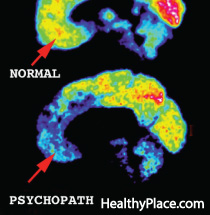
This real-world study proved what neuroscientists had long suspected. The psychopath's lack of conscience is not a philosophical choice, a bad mood, or a behavioral tantrum. As the real brain scans show, their internal brakes are broken, their emotional engine is completely cold, and they are quite literally blind to human empathy.
Real-World Case Study: The Mind of Brian Dugan
To understand how neurobiological theories translate into real-world forensic science, we can examine the case of Brian Dugan. Dugan was a convicted American serial killer and rapist who committed a string of brutal, highly calculated crimes during the 1980s. During his landmark sentencing trial, his defense team hired Dr. Kent Kiehl, a leading forensic neuroscientist from the University of New Mexico, to conduct a comprehensive psychiatric and neurological evaluation using a mobile MRI scanner. [1, 2]
First, Dr. Kiehl evaluated Dugan using the standard Hare Psychopathy Checklist-Revised (PCL-R). While an average person scores around a 4 or 5, and the clinical threshold for psychopathy is 30, Brian Dugan scored a staggering 37 out of 40. This astronomical score placed him in the 99.5th percentile of the population, making him one of the most severe clinical psychopaths ever recorded in modern history. [1, 2, 3, 4]
The subsequent fMRI scans revealed the physical reality behind his high checklist score. While inside the scanner, Dugan was shown highly distressing and evocative images—such as severe injuries or faces frozen in profound terror. In a neurotypical brain, these images cause a massive spike in oxygenated blood flow to the paralimbic system and the amygdala, generating an immediate internal alarm. [1, 2, 3, 4, 5]
However, Dugan’s brain scans showed profoundly low activity and structural thinning across his entire emotional control center. His amygdala failed to activate. When Dr. Kiehl interviewed Dugan about his heinous crimes after the scan, Dugan discussed them with complete emotional detachment, casually stating that he knew his actions were wrong intellectually, but he simply could not "feel" any remorse. Dr. Kiehl testified that Dugan possessed an "emotional IQ of a 5-year-old," proving that his absolute lack of a conscience was a direct product of a physically diseased, underdeveloped brain network. [1, 2, 3]
The Brian Dugan case provides a highly fascinating look into how forensic neuroscience is handled in the real legal world.
The Legal Status of the Scans and Lab Reports
When Dr. Kent Kiehl presented Brian Dugan’s neuroimaging data during the historic 2009 sentencing trial, a major legal debate took place. The lead prosecutor argued that showing the actual, brightly coloured fMRI brain scans to the jury would be "too seductive" and could unfairly bias their judgment.
Because of this, the judge made a historic ruling: the defense was forbidden from showing the actual, physical brain scan images or the raw lab sheets directly to the jury. Instead, Dr. Kiehl was permitted to take the stand for six hours to describe the empirical data and read his professional interpretation of Dugan’s structural and functional brain deficits aloud.
As a result, Dugan's individual, raw medical files remain confidential court exhibits closed to the general public. However, the exact data and scientific findings dictating his case report are published across forensic literature
Conclusion
Decoding the psychopathic brain reveals that the condition is not characterized by a hyper-functioning, malicious mind, but rather by a highly localized biological failure. Psychopathy is an objective, neurodevelopmental disconnect: a brain where the emotional engine is quiet, the reward system is hyper-reactive, and the cable connecting logic to feeling is frayed.
Understanding these biological mechanics does not excuse harmful or predatory actions, nor does it diminish the need for accountability in forensic spaces. However, moving past outdated behavioral definitions and embracing precise neuroscientific mapping provides the tools needed to design objective diagnostic measures, specialized legal frameworks, and targeted early-intervention strategies for populations at risk..