
The Legacy of the Iceman — How One Man Changed Science Forever-Part 3
More than five thousand years after his death, Ötzi the Iceman continues to influence modern science. What began as the discovery of a frozen body eventually transformed into one of the most important archaeological investigations in history. Ötzi is not simply a prehistoric mummy. He is one of the most scientifically studied humans ever discovered.
sneha shah
3/9/20262 min read
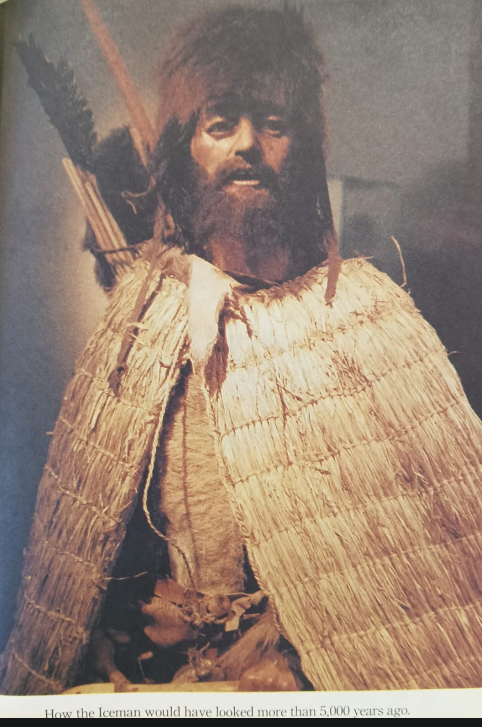
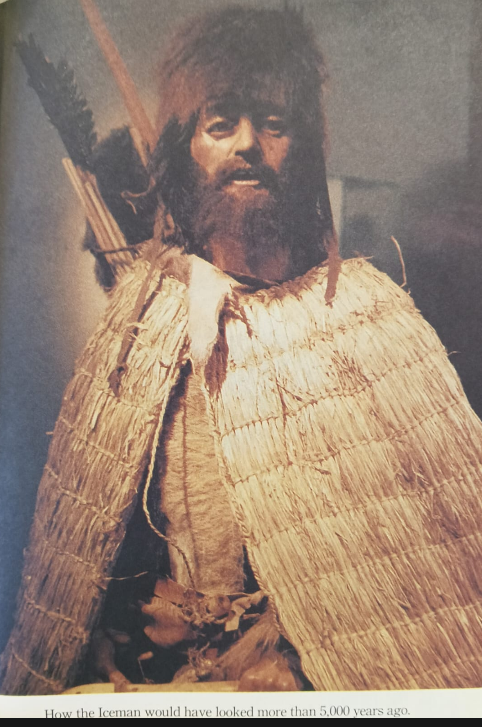
A Revolution in Archaeology
Before Ötzi, archaeologists mostly relied on artifacts—tools, pottery, and bones—to understand ancient life. Complete human remains with clothing, equipment, and preserved tissue were extremely rare.
Ötzi changed that completely.
For the first time, researchers could study:
A fully preserved Copper Age human body
Clothing and survival technology from the same individual
The exact tools someone carried in daily life
Biological evidence of diseases and injuries
This allowed scientists to reconstruct not just ancient culture, but the life of a specific person who lived thousands of years ago.
It turned archaeology into something closer to forensic investigation across millennia.
What His DNA Revealed
Advances in genetic technology allowed scientists to analyze Ötzi’s DNA, unlocking new information about ancient populations.
Researchers discovered that:
He had brown eyes and dark hair
His genetic lineage connects with early European farming populations
He carried genetic markers linked to heart disease
He was infected with Lyme disease, one of the oldest confirmed cases ever found
Even more fascinating, scientists later identified living relatives of Ötzi in modern Europe through shared genetic markers.
In other words, the past is not completely gone.
It still walks among us.
Lessons About Ancient Technology
Ötzi’s tools revealed something surprising: early humans were far more technologically advanced than many people assume.
His equipment showed evidence of:
Sophisticated leatherworking
Carefully constructed footwear for mountain travel
Early metalworking knowledge
Portable survival kits for long journeys
These discoveries challenged the old stereotype that prehistoric humans lived simple, primitive lives.
Instead, they were highly skilled problem-solvers, constantly adapting to difficult environments.
The Science of Preservation
Keeping Ötzi preserved is a scientific challenge in itself.
Today he is stored at the South Tyrol Museum of Archaeology, inside a specialized chamber that recreates the icy conditions where he was originally found.
The chamber maintains:
A temperature of about −6°C
Nearly 100% humidity
These conditions prevent the body from drying or decaying, allowing scientists to continue studying him without damaging the remains.
Even after decades of research, new technologies continue to reveal new details about his life.
Why the Iceman Still Matters
Ötzi reminds us that history is not just about kings, wars, or monuments.
Sometimes, the most powerful story comes from an ordinary person whose life was unexpectedly preserved.
Through him we learned:
How ancient humans adapted to extreme environments
What they ate and how they traveled
What diseases affected them
How they treated pain and injury
In many ways, Ötzi acts as a bridge between ancient humanity and the modern world.
Five thousand years separate us, yet his story feels strangely familiar.
A Man Who Refused to Disappear
Time usually erases people.
Ice did the opposite.
Instead of fading into history, Ötzi became a messenger from another age—one who continues to teach scientists, historians, and researchers about the resilience and ingenuity of early humans.
His life ended in the mountains long ago, but his story is still unfolding.
And perhaps that is the most remarkable thing of all.